This is default featured slide 1 title

Go to Blogger edit html and find these sentences.Now replace these sentences with your own descriptions.This theme is Bloggerized by Lasantha Bandara - Premiumbloggertemplates.com.

This is default featured slide 2 title

Go to Blogger edit html and find these sentences.Now replace these sentences with your own descriptions.This theme is Bloggerized by Lasantha Bandara - Premiumbloggertemplates.com.

This is default featured slide 3 title

Go to Blogger edit html and find these sentences.Now replace these sentences with your own descriptions.This theme is Bloggerized by Lasantha Bandara - Premiumbloggertemplates.com.

This is default featured slide 4 title

Go to Blogger edit html and find these sentences.Now replace these sentences with your own descriptions.This theme is Bloggerized by Lasantha Bandara - Premiumbloggertemplates.com.

This is default featured slide 5 title

Go to Blogger edit html and find these sentences.Now replace these sentences with your own descriptions.This theme is Bloggerized by Lasantha Bandara - Premiumbloggertemplates.com.

Monday, June 23, 2014

Ebook Download The Edge of Anarchy: The Railroad Barons, the Gilded Age, and the Greatest Labor Uprising in America, by Jack Kelly

Ebook Download The Edge of Anarchy: The Railroad Barons, the Gilded Age, and the Greatest Labor Uprising in America, by Jack Kelly

We share you likewise the way to obtain this book The Edge Of Anarchy: The Railroad Barons, The Gilded Age, And The Greatest Labor Uprising In America, By Jack Kelly without visiting the book shop. You can continuously check out the web link that we give as well as ready to download and install The Edge Of Anarchy: The Railroad Barons, The Gilded Age, And The Greatest Labor Uprising In America, By Jack Kelly When lots of people are active to look for fro in the book store, you are quite simple to download and install the The Edge Of Anarchy: The Railroad Barons, The Gilded Age, And The Greatest Labor Uprising In America, By Jack Kelly here. So, exactly what else you will choose? Take the motivation right here! It is not only giving the best book The Edge Of Anarchy: The Railroad Barons, The Gilded Age, And The Greatest Labor Uprising In America, By Jack Kelly yet also the best book collections. Below we always offer you the best as well as simplest method.

The Edge of Anarchy: The Railroad Barons, the Gilded Age, and the Greatest Labor Uprising in America, by Jack Kelly

The Edge of Anarchy: The Railroad Barons, the Gilded Age, and the Greatest Labor Uprising in America, by Jack Kelly


The Edge of Anarchy: The Railroad Barons, the Gilded Age, and the Greatest Labor Uprising in America, by Jack Kelly


Ebook Download The Edge of Anarchy: The Railroad Barons, the Gilded Age, and the Greatest Labor Uprising in America, by Jack Kelly

Book, truth friend of yours while remaining in a lonesome time. Schedule, is a friend for you to go along with when being in a difficult time of work due date. Book is a manner that you should hold daily making far better future. When a person is causing get numerous tasks and also you have few times freely, it will certainly be better for you to invest it wisely.

This motivating publication turns into one that is really flourishing. After released, this publication can steal the market and book fans to always run out of this book. As well as currently, we will not allow you go out any more to get this book. Why should be The Edge Of Anarchy: The Railroad Barons, The Gilded Age, And The Greatest Labor Uprising In America, By Jack Kelly As a book lover, you need to know that appreciating guide to review need to be relevant to exactly how you specifically need now. If they are not excessive importance, you could take the way of the ideas to produce for brand-new ideas.

And also now, after recognizing the author, you could likewise conquer that guide is advised to read generally form the factors. Today publication qualified The Edge Of Anarchy: The Railroad Barons, The Gilded Age, And The Greatest Labor Uprising In America, By Jack Kelly is done to handle you in obtaining even more features of the lifestyle. You could not have to make different ways of related resources to occur. When you have the different means to read something, you can aim to choose the soft documents systems of this publication.

As a result of this e-book The Edge Of Anarchy: The Railroad Barons, The Gilded Age, And The Greatest Labor Uprising In America, By Jack Kelly is sold by on the internet, it will certainly alleviate you not to publish it. you could get the soft file of this The Edge Of Anarchy: The Railroad Barons, The Gilded Age, And The Greatest Labor Uprising In America, By Jack Kelly to conserve in your computer, gadget, as well as a lot more gadgets. It depends upon your willingness where and also where you will review The Edge Of Anarchy: The Railroad Barons, The Gilded Age, And The Greatest Labor Uprising In America, By Jack Kelly One that you need to constantly bear in mind is that reading book The Edge Of Anarchy: The Railroad Barons, The Gilded Age, And The Greatest Labor Uprising In America, By Jack Kelly will endless. You will certainly have willing to check out other book after completing a book, as well as it's constantly.

The Edge of Anarchy: The Railroad Barons, the Gilded Age, and the Greatest Labor Uprising in America, by Jack Kelly

Review

"Easy reading...A skilled craftsman...Kelly’s writing is vivid, especially in its depiction of Debs and Pullman." ―Robert D. Parmet, New York Labor History Association "Timely...Kelly tells this story with exhilaration...[The Edge of Anarchy] is not only a wonderful distillation of why the 1894 Pullman strike still matters, but it also presents an excellent overview of what life was like in 1894―full of technological promise, and yet riddled with class conflict and economic warfare." ―New York Journal of Books"Masterful." ―Railroad History"Kelly vividly portrays the personalities involved, from elected officials to labor leaders, and makes the tensions of the time quite contemporary." ―Booklist (starred review)"Kelly's vigorous narrative serves well to set down the facts of a turbulent, little-known history." ―Kirkus Reviews"A vivid account of a tumultuous era." ―Nick Salvatore, author of Eugene V. Debs: Citizen and Socialist"In gripping detail, The Edge of Anarchy reminds us of what a pivotal figure Eugene V. Debs was in the history of American labor, a man who spoke to wealthy business owners without fear. The story of his battles with George Pullman and other powerful corporate titans is a tale of courage and the steadfast pursuit of principles at great personal risk." ―Tom Clavin, author of Dodge City "Jack Kelly’s remarkable new book, Ragged Edge, explores an era of our industrial and labor history with remarkable parallels to our own moment: ascendant forces of all-powerful capital, a government beholden to it, new labor movements emerging from the ashes of older ones, populist uprisings on the left and right, political polarization, and a working class divided to its detriment by issues of race and status. Kelly writes history with the storytelling prowess of a novelist or screenwriter, making forgotten subject matter newly accessible and exciting. Think Erik Larson meets Howard Zinn." ―David Rolf, President SEIU 775; Author of Fight for $15: The Right Wage for a Working America (New Press, 2016)"Pay attention, because Jack Kelly’s Ragged Edge not only captures the flickering Kinetoscopic spirit of one of the great Labor-Capital showdowns in American history, it helps focus today’s great debates over the power of economic concentration and the rights and futures of American workers." ―Brian Alexander, author of Glass House: The 1% Economy and the Shattering of the All-American Town

Read more

About the Author

JACK KELLY is a journalist, novelist, and historian, whose books include Band of Giants, which received the DAR's History Award Medal, and Heaven's Ditch. He has contributed to The Wall Street Journal, and other national periodicals, and is a New York Foundation for the Arts fellow. He has appeared on The History Channel and been interviewed on National Public Radio. He lives in New York's Hudson Valley.

Read more

Product details

Hardcover: 320 pages

Publisher: St. Martin's Press (January 8, 2019)

Language: English

ISBN-10: 1250128862

ISBN-13: 978-1250128867

Product Dimensions:

6.4 x 1.2 x 9.8 inches

Shipping Weight: 1.1 pounds (View shipping rates and policies)

Average Customer Review:

4.5 out of 5 stars

12 customer reviews

Amazon Best Sellers Rank:

#62,275 in Books (See Top 100 in Books)

The Edge of Anarchy is an in-depth well researched book by Jack Kelly about the Pullman strike in Chicago. While the strike itself didn't furnish the end result that the workers needed, it did cause new labor rules to be enacted by the government.The book also shows what is still true today-that the moneyed elite are not made to suffer for their wrongdoing, only the lower classes pay the price. The strike happened during a time where corporations and the robber-barons who ran them owned the government as well. This included judges, who interpreted the laws as their puppet masters required.However, labor laws continued to expand as a result of the strike, which is why it was such a profound event in history. The conditions of the day were unsafe and underpaid while the heads of the corporations made piles of money and shareholders got huge returns. The rich got richer.George Pullman was in some respects a typical tycoon of the time, although he saw himself as altruistic, by creating a community where his workers were made to reside. In effect, he became a feudalistic Lord. He set the rents high and cut the wages so the workers barely survived and owed his company money. It was the "company store" scenario. Pullman cut wages several times, the last at 25%, until his workers could not afford to eat because of the high rents. He also insisted that his worker must live in his community and pay his rent if they wanted a job.The author gives amazing insight into the plight of these workers and the reasons behind the strike. He also bares the truth of Grover Cleveland's all-in support for the robber barons and the court's shameful injunctions and rulings. He makes you feel the mood of the entire country and the sympathy held for the strikers.The book's point-of-view is of Eugene Debs, who had a vision of a fair working relationship between workers and business and how he tried to achieve it. Debs suffered personally for his role in the strike and was incarcerated for a time. He became more socialist as he aged and ran for president on the socialist ticket, garnering 900,000 votes, which was about 6% at the time.Anyone who has an interest in unions, labor, and business should read this book and learn from its lessons.

In general I enjoyed this book. It provided an in-site into the fathers (and mothers) of the American labor movement. There is no question that the plight of the average worker was bad at this time. To some extent, the book doesn't show just how bad it was. On the other hand, there is a mild attempt to compare the plight of the American Worker from 100+ years ago and today. In particular, wealth inequlality is softly compared between then and now.There will always be those that have more than you. To compare a time when people could die of starvation and a time when they may not have the newest smart phone detracts from this important work.

Very good writing and glimpse into a turbulent time in our history.

The best reason to get Jack Kelly's new book is it shines a spotlight on our current gilded age. Law is center to both the gilded age's ruling class authority; for it hangs men[& women] whose views & actions challenge the privileged ownership class[the book tells of the four labor men hanged on November 11, 1887].The Haymarket Massacre was the aftermath of a bombing[police provocateur?] that took place at a labor demonstration in Haymarket Square, Chicago. The workers were striking for an eight-hour day and in reaction to several workers killed by police the previous day. Mother Jones spoke right to the heart of the problem then and now/The working class and the employment class have nothing in common. There can be no peace so long as hunger and want are found among millions of working people; while the few who make up the ownership class, have all the good things of life. Pray for the dead; fight for the living. In Kelly's book there's a great part where a former marble cutter urges all his labor members to oppose plutocratic enslavement and to fight tyranny and the tyrant. In Kelly's book there's a reference to the Pullman boycott as a reason for Labor day being the first Monday in September. The author's reference, in point of fact, points out that the legislation had already been out of the Senate committee months before the Pullman walkout. Left unsaid by the author; however, is that the congress was trying to divide and conquer May Day celebrations worldwide[held May 1st for centuries]. So the U.S government moved it, by the stroke of a pen, to September pretending May Day was a Russian holiday[always employing deception]!If the reader hasn't guessed it yet; the author focuses on the Pullman Strike to juxtaposition striking similarities between the later19th century gilded age, and our current early 21st century's gilded age. Although the author doesn't tell the reader specifically; the reader cannot but help himself, or herself from making the comparisons: from the fake news then, to the fake news of today; from the plutocrims then, to the plutocrims now; from the corporation is a person Supreme Court decision in 1886, to the corporation is a person Supreme Court decision in 2009; to the ruling monopolies then; to the ruling monopolies now; to the awe inspiring magical technologies then; to the magical technologies now; to the heart breaking inequalities then; to the heart breaking inequalities today; to the shift from local to national to international then, to the shift from local to national to international now; to the fight is on cry then, that at no time in the history of the nation was the issue between labor and corporations so sharply drawn an well defined - to the fight is on cry today, heard worldwide, as concentrated capital puts a stranglehold on workers everywhere. As I write this, the Yellow Vests are spreading outwards from France.The edge of anarchy is here once again; but this time it's global!Debs put it simply/The Government ownership of railroads is decidedly better for the peopled than railroad ownership of Government.In 1918 a jury convicted Debs of treason for speaking out. After sentencing Debs said/Years ago I recognized my kinship with all living beings. While there is a lower class, I am in it, and while there is a criminal element I am of it, and while there is a soul in prison, I am not free.When the government intervened to kill the labor movement he said/In the gleam of every bayonet and flash of every rifle the class struggle is revealed.[P.S.] Actually, just prior to WW1 the Wobblies[Industrial Workers of the World] were making the ruling class/bankers very nervous. The international banking cartel and other global puppet masters engineered a world war to put a bayonet in those workers' hands and had them go at each other. Besides solving that pesky labor problem; they also solved the growing global debt crisis[sound familiar?]. Plus, they also got to carve up the world; while they engineered a new globalized corporatism on steroids, at Bretton Woods. In this analyses, the primary economic focus is the contrast between production[real economy] & extraction[parasite economy]. In the afore mentioned economic fight - the parasites won.

The Edge of Anarchy: The Railroad Barons, the Gilded Age, and the Greatest Labor Uprising in America, by Jack Kelly PDF
The Edge of Anarchy: The Railroad Barons, the Gilded Age, and the Greatest Labor Uprising in America, by Jack Kelly EPub
The Edge of Anarchy: The Railroad Barons, the Gilded Age, and the Greatest Labor Uprising in America, by Jack Kelly Doc
The Edge of Anarchy: The Railroad Barons, the Gilded Age, and the Greatest Labor Uprising in America, by Jack Kelly iBooks
The Edge of Anarchy: The Railroad Barons, the Gilded Age, and the Greatest Labor Uprising in America, by Jack Kelly rtf
The Edge of Anarchy: The Railroad Barons, the Gilded Age, and the Greatest Labor Uprising in America, by Jack Kelly Mobipocket
The Edge of Anarchy: The Railroad Barons, the Gilded Age, and the Greatest Labor Uprising in America, by Jack Kelly Kindle

The Edge of Anarchy: The Railroad Barons, the Gilded Age, and the Greatest Labor Uprising in America, by Jack Kelly PDF

The Edge of Anarchy: The Railroad Barons, the Gilded Age, and the Greatest Labor Uprising in America, by Jack Kelly PDF

The Edge of Anarchy: The Railroad Barons, the Gilded Age, and the Greatest Labor Uprising in America, by Jack Kelly PDF

Sunday, June 22, 2014

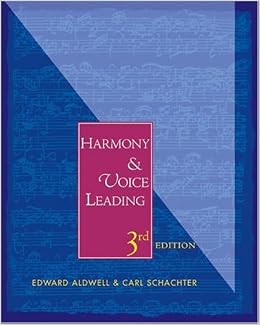
Get Free Ebook Harmony and Voice Leading

Get Free Ebook Harmony and Voice Leading

Today book Harmony And Voice Leading our company offer below is not sort of usual book. You recognize, reading now does not indicate to handle the published book Harmony And Voice Leading in your hand. You could get the soft data of Harmony And Voice Leading in your device. Well, we indicate that guide that we extend is the soft documents of guide Harmony And Voice Leading The material and all points are very same. The distinction is just the forms of guide Harmony And Voice Leading, whereas, this problem will exactly pay.

Harmony and Voice Leading

Harmony and Voice Leading


Harmony and Voice Leading


Get Free Ebook Harmony and Voice Leading

Among the suggested and also well-known publications to have today is the Harmony And Voice Leading When you type the title of this publication, everywhere, you will get it as one of the top listed book to check out. Also it is in the book store, authors, or in some internet sites. However, when you are rally keen on guide, this is your perfect time to get and also download and install now and also here with your internet link.

This is the book that will certainly urge you to invest more times in order making far better idea of details and understanding to link to all people worldwide. One of guides that current has been launched is Harmony And Voice Leading This s the sort of publication that will become a brand-new method to the people is brought in to read a publication. This book has the tendency to be the manner for you to connect one individuals to others that have exact same leisure activity, reading this publication.

As well as exactly how this book will assist you? Do you assume that you have problem with comparable topic? This is no worry about this. Also you have had the resources to fix your troubles; this book will certainly complete what you need. Harmony And Voice Leading is one of the books that that has actually been composed by the trusted author. With the experience, expertise, as well as truths that are provided by this publication, it is really expert.

Something various, that's something splendid to read this kind of depictive book. After obtaining such publication, you might not have to think of the means your participant concerning your issues. Yet, it will offer you facts that can affect just how you look something and also think of it effectively. After reading this book from soft data offered in link, you will recognize just how precisely this Harmony And Voice Leading steps forward for you. This is your time to select your publication; this is your time ahead to your requirement.

Harmony and Voice Leading

Review

"The Exercises are first rate.""The Exercises are also extremely good. In many chapters there are more lengthy exercises than most instructors could possibly use, but it's nice to be able to choose the ones one likes best.""I consider HARMONY AND VOICE LEADING to be without question the preeminent harmony book on the market today. ... It offers instruction on a high musical and intellectual level that does not condescend to students, but rather encourages growth in the subject that is both rapid and profound.""(I use HARMONY AND VOICE LEADING because of) ... the marvelous organization of the material; the authors' impressive mastery of the material; the musicianly quality of the presentation, which conveys the necessary information very effectively...but never mechanically; the high quality of the exercises and excerpts for analysis, which are thought-provoking for the teacher as well as the student; and the extremely well-chosen musical examples.""The concepts are approached from a musical standpoint as I mentioned earlier. In addition, the coverage is incredibly thorough and logically presented. My personal favorite is that the homework exercises are largely compositional in nature, as opposed to 'fill in the blank' harmonic exercises. I believe that through composition and melody harmonization students best learn harmony and voice leading principles. Most importantly, through composition, students will make the transition to counterpoint studies more easily."

Read more

About the Author

Edward Aldwell received his bachelor's and master's degrees from The Juilliard School where he studied piano with Adele Marcus. He studied theory and analysis privately with Carl Schachter and later with Ernst Oster. He has been a member of the Techniques of Music department at Mannes since 1969 and a member of the piano department since 1973. He has taught theory at The Curtis Institute of Music since 1971 and is currently Chairperson of the theory department. He has given recitals and master classes throughout the United States as well as in Israel, England and Germany, many of them devoted to the works of Bach. Recordings include both books of THE WELL-TEMPERED CLAVIER, GOLDBERG VARIATIONS and FRENCH SUITES OF BACH, as well as works of Hindemith and Faure.

Read more

Product details

Hardcover: 624 pages

Publisher: Cengage Learning; 3rd edition (August 13, 2002)

Language: English

ISBN-10: 9780155062429

ISBN-13: 978-0155062429

ASIN: 0155062425

Product Dimensions:

7.8 x 1.2 x 9.2 inches

Shipping Weight: 3 pounds (View shipping rates and policies)

Average Customer Review:

4.8 out of 5 stars

13 customer reviews

Amazon Best Sellers Rank:

#956,842 in Books (See Top 100 in Books)

A very good book on tonal harmony. Enphasis is made upon voice leading - title says- and the chords that can support a soprano line or movement; also in the bass. In my opinion a very interesting point of view, making the sequences of chords understandable. I give it 4 stars, because the ordering of the topics is rather mixed sometimes, anyway a very good book !

These cd's made it possible to study the examples with out my Piano with me. Summer classes went better because of these cd's!

A very valuable book in the study of Harmony and Voice Leading. Along with the workbooks, this is highly recommended.

it was so clear as descried

Thank you

Exactly as promised. Thanks.

GREAT DEAL!!

When I was a student at the University of Michigan School of Music in the late seventies and early eighties, we used the then brand new first edition of this book. I thought it was quite good then, and I believe this third edition to be an even better book. It treats the subjects of tonal harmony and voice leading quite well. There have been some solid improvements in the way a few things are explained and some changes in the musical examples. However, it is still fundamentally the same sound course for undergraduate music theory it has been since 1978. However, it now comes in one volume instead of the two volumes of the first edition.The text begins with a quick review of the basics of musical grammar, a brief introduction of the rudiments of musical notation, intervals, rhythm (and meter), chords, and four-part harmony. Part II talks about the powerful relationship between the tonic and dominant chords, chord progressions elaborating that relationship, and even the dominant as a key area (whether you call it tonicization or modulation is up to you). Part III discusses the implications of root position, first inversion, and second inversion chords in elaborating harmonies and in sequences. Part IV is actually about contrapuntal issues, but is framed in a discussion of melodic figuration. Part V introduces chromaticism, modal mixture, and extends the discussion on uses of seventh chords. Part VI extends the discussion of chromaticism and includes ninth and eleventh chords, Phrygian II (Neapolitan chords), augmented sixths, and more types of mixture. There is also important discussion of the implications all this has for voice leading and modulation to other key areas.Some might wish that it contained some treatments of graphical (Schenkerian notation), and I am one of them, but that is a quibble compared to this book's many strengths. The counter argument is that until the students really have a handle on the basics of harmony and how voice leading is handled through the music of the early twentieth century, there really isn't a way for them to grasp the meaning of the larger structures Schenker's graphical notation was created to represent. I think that is a fair point, but still think there are some basics in notation that could be introduced early in the process when talking about the basic structure of melodies and supporting harmonies and candential formulas.The explanations are clear and the musical examples apt. In fact, someone could actually work through this book on his own and grasp what is being presented. Of course, an instructor is helpful to check work and explain things that remain unclear in the student's mind, but that is really true for any book on any subject.There are some wonderful materials to supplement this text. The most important are the two work books (WB I - ISBN 0-15-506226-3 / WB II - ISBN 0-15-506234-4. They are useful exercises that help the student learn the material by actively working through the application of the materials discussed.Another resource that should not be overlooked is the two-CD set (ISBN 0-534-52216-5) that contains performances of the hundreds of musical examples in the textbook (not the workbooks). It can really help a student to listen to examples that are unclear. If a student can play them herself or hear them in his head, so much the better, but these discs can enrich reading through the textbook and making sure that you understand what is being presented to you.Kudos to Professors Aldwell and Schachter for this wonderful text and supporting materials.

Harmony and Voice Leading PDF
Harmony and Voice Leading EPub
Harmony and Voice Leading Doc
Harmony and Voice Leading iBooks
Harmony and Voice Leading rtf
Harmony and Voice Leading Mobipocket
Harmony and Voice Leading Kindle

Harmony and Voice Leading PDF

Harmony and Voice Leading PDF

Harmony and Voice Leading PDF

Ebook Arm of the Sphinx: The Books of Babel, Book 2

Ebook Arm of the Sphinx: The Books of Babel, Book 2

This is not kind of common publication. It provides you incredible web content to acquire the ideas. Close to, the presence of this book will lead you to always really feel much better. You could not have to create or spend more time to go; the Arm Of The Sphinx: The Books Of Babel, Book 2 can be acquired from the soft file. Yeah, as this is an online library, you can discover many types and also genres of the books based on the styles that you really need.

Arm of the Sphinx: The Books of Babel, Book 2

Arm of the Sphinx: The Books of Babel, Book 2


Arm of the Sphinx: The Books of Babel, Book 2


Ebook Arm of the Sphinx: The Books of Babel, Book 2

Now present! A book that will offer wonderful impacts for you! A book has large amounts with the daily problem around. This publication is a publication that has been developed by a seasoned writer. For the result, the author truly has great bring about bring in the visitors. It creates the title of this publication is additionally so intriguing. Arm Of The Sphinx: The Books Of Babel, Book 2 is this publication title.

It's not surprisingly when entering this site to obtain the book. One of the prominent books now is the Arm Of The Sphinx: The Books Of Babel, Book 2 You might be confused since you can't discover guide in the book shop around your city. Generally, the popular book will be marketed swiftly. When you have found the shop to purchase guide, it will be so hurt when you lack it. This is why, searching for this popular publication in this site will certainly give you benefit. You will certainly not lack this book.

Connected to this situation, you can really have the time to take Arm Of The Sphinx: The Books Of Babel, Book 2 as so as possible. Be among the wonderful individuals that take this publication additionally for source. For guaranteeing you to obtain this book, we will show how you can locate and also get the soft file of it here. Simply adhere to the link that we offer as well as you can directly discover and also make offer to get this publication. This is only chosen to get and also wait in some tool that you bring all over or in the house or office.

Simply adhere to the means to obtain Arm Of The Sphinx: The Books Of Babel, Book 2 that we offer in this website. It's so simple. Go to the web link that we constantly offer in every web page. Discover the book and also get it. When you desire really the experiences to draw from this publication and also various other book collections, you could see this home and search by the title. It will certainly be so simple to find out thousands of guides that are written in this all over the world.

Arm of the Sphinx: The Books of Babel, Book 2

Product details

#detail-bullets .content {

margin: 0.5em 0px 0em 25px !important;

}

Audible Audiobook

Listening Length: 14 hours and 7 minutes

Program Type: Audiobook

Version: Unabridged

Publisher: Hachette Audio

Audible.com Release Date: March 16, 2018

Whispersync for Voice: Ready

Language: English, English

ASIN: B07BHRD2Q5

Amazon Best Sellers Rank:

Even more fascinating than Book 1. Prose and imagination that will set your head spinning in the best way possible. Bizarre, bold, and beautiful.I was a pretty early reader of Josiah's first book in this series, Senlin Ascends, well before his trad deal, and was blown away by his prose, unique story and setting, and unfettered imagination.Hard to believe for me, but I found Arm of the Sphinx to be even more fascinating. The characters are fleshed out in unexpected ways, new intriguing characters are introduced, the setting gets even more bizarre, and plot is even more bold. And more - he courageously wades into dangerous waters with choices in perspective (POV). Some call it "head-hopping," and nearly always derisively. I say 'Huzzah!' Witness it done by a true master of prose, and if you still don't like it or see its merit, well, sorry about that. I for one applaud experimentation, the different, the new (and the old made new again), the avant garde, if you will. Even if it doesn't work, I always greatly appreciate the attempt. In Bancroft's case, though, it works. It ALL works.Now I'm dying to get my hands on The Hod King... DYING...

I had this in my hands within days of finishing the first book and shortly after that I was done and bitching about the lack of a third book.Now not to insult the first book but Bancroft somehow makes the extraordinary events and revelations of Senlin Ascends seem almost mundane in comparison to the incredible goings on within The Arm of The Sphinx. If you’ve only read the first book you’ll no doubt think this impossible and I have gone completely mad.Thomas Senlin has grown and changed but still maintains the integrity and intelligence that has drawn his crew to him like a magnet. His wild but thoughtful plans for pirating have kept the Stone Cloud afloat and he has even developed a reputation among other sailors….as the guy that only takes a tenth of your cargo. I honestly burst out laughing at this revelation as for me it just summed up the enigmatic qualities of our protagonist and why his journey up the tower was worth watching above all others. There is also a sense that other characters, not just his crew, but those that know and realise the inner workings of the Tower, also see something unique in Senlin’s approach to his quest. He has become the guy you let into the exclusive club, not due to intimidation, but because you sense he is bigger than the world outside and will makes yours more interesting should he grace it with his presence.Some other POVS are introduced and we get to learn much more about the crew and their own motivations and desires for serving on the Stone Cloud. They are all interesting paths and watching the relationship between Adam and Voleta grown and change was particularly satisfying. We discover more about Iren and her past and spend many hours worrying about Edith and her future. It’s all brilliant stuff.Readers are also treated to the appearance of the Sphinx, more mystery than man and the one figure capable of imbuing normal people with inhuman mechanical additions. Everything scene between the Sphinx and Voleta was great fun and magical in every sense of the word.I always found myself looking forward to the coming of every chapter because of the small excerpts at the top of the page. In the first book they were mostly from the Everyman’s Guidebook and as we discovered Marya’s fate they shifted to pieces from Senlin’s own writings Every Mans Tower as the safety net of the for that false reality was no longer needed. If the first book was about discovery this second one seems more related to duty and the desire to crush any sense of creativity or burgeoning sense of self, perhaps anything that may threaten the status quo. With The Wifely Way telling us “Take stock of your virtues. Aspire within your means. No one admires the bird who sings over the orchestra” and Folkways and Right of Ways in The Silk Garden expressing “Should you every be tempted to dip your toes in the Garden’s aquifiers, just remember where the water flows. One man’s broth becomes another man’s brew” there is definitely an attempt to beat down the readers and put them in their place.This is a ridiculously well written second book and simply one of the best and most unique fantasy series I’ve picked up. It drew me further into this amazing world whilst making me painfully aware the journey had only just begun. I enjoyed every second of reading and was suitably gobsmacked on the final page that a silent ‘f#@k me’ and ‘well done’ were uttered to an empty room.Oh the places you’ll go.

Having adored its predecessor, my expectations were much higher for Arm of the Sphinx, and Bancroft does not disappoint.The story shifts slightly in style as Senlin's situation changes. Rather than focusing on him entirely, the story is split between the perspectives of Senlin and his companions and they sail the skies, circling the tower in his continuing quest to find his lost wife. In some ways that omniscient view into the thoughts of multiple characters is disorienting at first, but as the narrative settles into it that approach allows the author to more intimately explore the group dynamics of Senlin and his crew.In many ways, while the first story is mostly about the tower as an obstacle, the second piece focuses upon Senlin himself, both in his virtue and vanity. The locations are no less intriguing, but more time is spent in tighter quarters: upon their airship, and in only a few rooms of their landings elsewhere. It trades broader tourism for a more character focused narrative, but it remains compelling.As a fan of epigraphs, I loved Bancroft's use of them here. The "Unlikable Alphabet" and other volumes quoted at the head of each chapter were mostly brief delights expounding upon the attitudes and culture of the world, but a few became powerful tools for driving home the events of the chapters.If there's a drawback to be considered, it's that this book feels very much like a bridge. The events drive us from point A to point B, focus mostly upon character arcs, and don't really evidence much progress in the quest laid out at the end of the first volume. I mention it because I can imagine it as a frustration for some, but personally I feel that the transition in Senlin's character is more deserving of focus than a frustrated exploration of a few additional ringdoms could have been.It almost feels unnecessary to review this book. If you have read the first, you'll be compelled to seek more, and if you haven't, then you should start there regardless. If you worried The Books of Babel might lose steam, I promise there are entire ringdoms dedicated to making sure that never happens.

Arm of the Sphinx: The Books of Babel, Book 2 PDF
Arm of the Sphinx: The Books of Babel, Book 2 EPub
Arm of the Sphinx: The Books of Babel, Book 2 Doc
Arm of the Sphinx: The Books of Babel, Book 2 iBooks
Arm of the Sphinx: The Books of Babel, Book 2 rtf
Arm of the Sphinx: The Books of Babel, Book 2 Mobipocket
Arm of the Sphinx: The Books of Babel, Book 2 Kindle

Arm of the Sphinx: The Books of Babel, Book 2 PDF

Arm of the Sphinx: The Books of Babel, Book 2 PDF

Arm of the Sphinx: The Books of Babel, Book 2 PDF

Tuesday, May 13, 2014

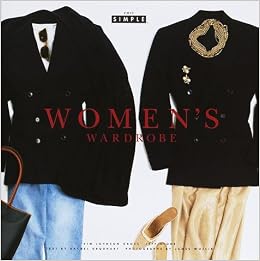
Ebook Download Women's Wardrobe (Chic Simple), by Kim Johnson Gross Jeff Stone

Ebook Download Women's Wardrobe (Chic Simple), by Kim Johnson Gross Jeff Stone

How if your day is started by checking out a publication Women's Wardrobe (Chic Simple), By Kim Johnson Gross Jeff Stone Yet, it is in your gizmo? Everybody will certainly constantly touch and us their device when getting up as well as in morning activities. This is why, we suppose you to additionally check out a book Women's Wardrobe (Chic Simple), By Kim Johnson Gross Jeff Stone If you still confused the best ways to obtain guide for your device, you could adhere to the means below. As right here, we offer Women's Wardrobe (Chic Simple), By Kim Johnson Gross Jeff Stone in this internet site.

Women's Wardrobe (Chic Simple), by Kim Johnson Gross Jeff Stone

Women's Wardrobe (Chic Simple), by Kim Johnson Gross Jeff Stone


Women's Wardrobe (Chic Simple), by Kim Johnson Gross Jeff Stone


Ebook Download Women's Wardrobe (Chic Simple), by Kim Johnson Gross Jeff Stone

Women's Wardrobe (Chic Simple), By Kim Johnson Gross Jeff Stone. Accompany us to be member right here. This is the site that will provide you alleviate of looking book Women's Wardrobe (Chic Simple), By Kim Johnson Gross Jeff Stone to read. This is not as the other website; the books will be in the types of soft file. What benefits of you to be member of this website? Obtain hundred collections of book link to download as well as obtain constantly upgraded book every day. As one of guides we will present to you currently is the Women's Wardrobe (Chic Simple), By Kim Johnson Gross Jeff Stone that includes an extremely completely satisfied principle.

Right here, coming again and also once again the variant sorts of the books that can be your wanted choices. To make it right, you are better to select Women's Wardrobe (Chic Simple), By Kim Johnson Gross Jeff Stone satisfying your requirement currently. Even this is kind of not intriguing title to check out, the writer makes an extremely different system of the content. It will allow you load curiosity as well as desire to understand extra.

How the writer makes as well as creates every word to organize as sentences, sentences as paragraph, and paragraphs as book are very stunning. It doesn't limit you to take a new method and mind to check out about this life. The concept, words, wise sentences, and all that are specified in this book can be taken as motivations.

In fact, we can not force you to read. But, by motivating you to read this Women's Wardrobe (Chic Simple), By Kim Johnson Gross Jeff Stone it could assist you to realize something new in your life. It is not expensive, it's very budget-friendly. Within that budget friendly price, you can get numerous things from this publication. So, are you sill question with this boom will give you? Allow make change to make much better your life and all life on the planet.

Women's Wardrobe (Chic Simple), by Kim Johnson Gross Jeff Stone

Amazon.com Review

Ideal for the woman who frequently has nothing to wear in the morning (or, rather, has a closetful of clutter but with few coordinating outfits to be salvaged), Chic Simple Women's Wardrobe will prove a sanity saver. It's an organizational consultant in book form, as well as a tool for developing personal style by finding the most flattering fashions and accessories for your lifestyle and personality. How exactly do you fold and tie a scarf? Is it really gauche to wear black to a wedding? Which designers make pants that successfully camouflage wide hips? What's acceptable for "casual day" at work, and what veers too far to the sloppy side? Such fashion conundrums are solved in these inspiring, sumptuously photographed pages. Women's Wardrobe also features helpful guides for deciphering care labels and treating stains, plus etiquette guidance for dressing for events and different locations (job interview in Boston vs. Seattle; daytime vs. nighttime party). Addresses and phone numbers for stores, and mail-order catalogs for everything from nursing bras to cashmere sweaters are included.

Read more

From Booklist

Women cozy with Ralph Lauren and Ann Taylor labels will probably get more out of this book than those whose tastes and pocketbooks run to J. C. Penney, though all three are mentioned. Still, there are some good, commonsense tips to be had about developing personal style and building a sensible wardrobe that will last for a very long time. The book design is probably more trendy than the advice. In fact, the use of different typefaces, ranging from extra extra large to so small a magnifying glass may be in order, may cause a few difficulties for readers. However, numerous photographs (only seen in galley) will certainly balance things out: they make the book not only great for browsing but also a visual smorgasbord of wardrobe ideas. Add to that some tips on packing for trips, a chapter on clothing jargon, and a selective list for catalog shoppers, and you have a book that may go out of date fairly quickly but won't be a shelf sitter now. Stephanie Zvirin

Read more

See all Editorial Reviews

Product details

Series: Chic Simple

Hardcover: 224 pages

Publisher: Knopf; 1st edition (November 28, 1995)

Language: English

ISBN-10: 067944484X

ISBN-13: 978-0679444848

Product Dimensions:

9.6 x 1 x 9.5 inches

Shipping Weight: 2.4 pounds (View shipping rates and policies)

Average Customer Review:

4.3 out of 5 stars

25 customer reviews

Amazon Best Sellers Rank:

#825,499 in Books (See Top 100 in Books)

This is a good book if you often, as I am, finding yourself at sea either in clothing stores or in your own closet. It gives you an idea for a basic wardrobe on which to build, and then ideas for special occasions.What I didn't like about the book is that it didn't have enough of the basic, this is what you should buy information. It talked a lot about types of fabrics and cuts, and things only fashion designers need to know. It is set up more like a coffee table book than a how-to.

This Chic Simple book is written for those who have a closetful of clothes but nothing ever to wear. It helps women pull together a total wardrobe and focuses on such key elements as:*style*elements of clothing (color, fabric, texture)*clothes (underwear,outerwear,suits etc)*care of clothes*definitions/glossary of fashion jargonThe book is very well illustrated with full color pictures and drawing. It does not give specific advice and seems to be written more for those in the clothing business/fashion designers. But overall, i enjoyed this book.

This book isn't exactly what I expected. It discusses the elements that are fundamental to a wardrobe, not just a superficial look at fashions. It inspired me to prune my closet and seriously consider quality. The fashions shown in photos are somewhat outdated, but the information is still relevant.

I ordered this book for my daughter, she's fifteen and loves fashion. It has great contents and information.

useful even in 2015timelessclassic

Great book for style with great photographs.

Once again classic style and what to maintain in a wardrobe.

the song "get a job" usually pops into my head, because most of the clothes (sans the summer beachwear) are for proffesional wear, and may be too formal for everyday (buisness casual is getting more and more casual). That said, this is the BEST fashion source book I have ever read because rather than focusing on the avant garde, it gives simple instructions on how to build a wardrobe, not imitate anything trendy, and I have seen many reveiws complain that this book is difficult to follow on a thrift store budget, but I regularly shop at the Salvation Army, and haven't experienced a problem finding simple cut black blazers and beige sweaters. (Anything you can find at the Gap you can find at the thrift store three months later) If you do want a good thrift store guide try anything by Rachel Ashwell, or the book Second Hand Chic.But I think this book can save you money, because it does suggest that you look through your wardrobe for your favorite pieces and shop in your closet, mixing and matching what you already have. Finding new combinations of outfits really can be like having new clothes, it also suggests swapping accesories to vamp up something you already have. These options are much cheaper then running out to the store (even the thrift store) to get new clothes.This book is also very well designed, with full color pictures and wonderful typography, but the best reason to get this book is the back section, it is true that this is not the flashiest part of the book, that there aren't even any pictures, but it does give a guide of what to wear based on where you live and what your body type is. It covers all kinds of body flaws and how clothes can help you hide them. (If you have a big bust, don't wear high pants with belts, etc.) At the very least, it helped me find a good suit for interviews.

Women's Wardrobe (Chic Simple), by Kim Johnson Gross Jeff Stone PDF
Women's Wardrobe (Chic Simple), by Kim Johnson Gross Jeff Stone EPub
Women's Wardrobe (Chic Simple), by Kim Johnson Gross Jeff Stone Doc
Women's Wardrobe (Chic Simple), by Kim Johnson Gross Jeff Stone iBooks
Women's Wardrobe (Chic Simple), by Kim Johnson Gross Jeff Stone rtf
Women's Wardrobe (Chic Simple), by Kim Johnson Gross Jeff Stone Mobipocket
Women's Wardrobe (Chic Simple), by Kim Johnson Gross Jeff Stone Kindle

Women's Wardrobe (Chic Simple), by Kim Johnson Gross Jeff Stone PDF

Women's Wardrobe (Chic Simple), by Kim Johnson Gross Jeff Stone PDF

Women's Wardrobe (Chic Simple), by Kim Johnson Gross Jeff Stone PDF

Wednesday, May 7, 2014

Download PDF , by Elizabeth George Speare

Download PDF , by Elizabeth George Speare

Yeah, as the very best vendor publication for all over the world presented in this website, , By Elizabeth George Speare becomes additionally an inspiring soft data publication that you could much better review. This is a book that is written by the well-known writer in the world. From this instance, it's clear that this website doesn't only offer you residential books but additionally the global books.

, by Elizabeth George Speare

, by Elizabeth George Speare


, by Elizabeth George Speare


Download PDF , by Elizabeth George Speare

Do you really feel better after ending up a publication to check out? What's your sensation when getting a brand-new book once more? Are you tested to read and also end up t? Great visitor! This is the moment to conquer your goo habit of reading. We show a far better publication once more to enjoy. Visiting this website will be additionally filled with desire to review? It will certainly not make you really feel bored due to the fact that we have various types and kinds of the books.

By only linking to the net and also find the web link that we always provide in every web page, you could subsequent guide to obtain. They are in the soft data programs. Currently, we will certainly introduce you , By Elizabeth George Speare as a reading publication today. We are really sure that this book will be really purposeful for you and also individuals around you. As lots of people in other places, they have actually taken this publication as their analysis collection. So, we recommend to you to obtain additionally this publication.

You could not picture just how the words will certainly come sentence by sentence and also bring a book to read by everyone. Its allegory as well as diction of the book selected really inspire you to attempt composing a publication. The inspirations will go finely and normally throughout you read this , By Elizabeth George Speare This is one of the effects of how the writer can influence the readers from each word written in the book. So this publication is extremely had to check out, even detailed, it will certainly be so valuable for you as well as your life.

Making certain, lots of people also have actually downloaded the soft file of , By Elizabeth George Speare though this website. Just by clicking web link that is offered, you can go directly to guide. Again, this publication will certainly be truly crucial for you to review, also they are easy, and also they will lead you to be the better life. So, exactly what do you consider this updated book collection? Let's inspect it now and prepare making this book as absolutely your collection and also analysis products. Think it!

, by Elizabeth George Speare

Product details

File Size: 1017 KB

Print Length: 260 pages

Publisher: HMH Books for Young Readers; Reissue edition (September 1, 1997)

Publication Date: September 1, 1997

Sold by: Amazon Digital Services LLC

Language: English

ASIN: B003K16PXM

Text-to-Speech:

Enabled

P.when("jQuery", "a-popover", "ready").execute(function ($, popover) {

var $ttsPopover = $('#ttsPop');

popover.create($ttsPopover, {

"closeButton": "false",

"position": "triggerBottom",

"width": "256",

"popoverLabel": "Text-to-Speech Popover",

"closeButtonLabel": "Text-to-Speech Close Popover",

"content": '

' + "Text-to-Speech is available for the Kindle Fire HDX, Kindle Fire HD, Kindle Fire, Kindle Touch, Kindle Keyboard, Kindle (2nd generation), Kindle DX, Amazon Echo, Amazon Tap, and Echo Dot." + '
'

});

});

X-Ray:

Enabled

P.when("jQuery", "a-popover", "ready").execute(function ($, popover) {

var $xrayPopover = $('#xrayPop_6E4D348653BE11E9B91E14C537417E71');

popover.create($xrayPopover, {

"closeButton": "false",

"position": "triggerBottom",

"width": "256",

"popoverLabel": "X-Ray Popover ",

"closeButtonLabel": "X-Ray Close Popover",

"content": '

' + "X-Ray is available on touch screen Kindle E-readers, Kindle Fire 2nd Generation and later, Kindle for iOS, and the latest version of Kindle for Android." + '
',

});

});

Word Wise: Enabled

Lending: Not Enabled

Screen Reader:

Supported

P.when("jQuery", "a-popover", "ready").execute(function ($, popover) {

var $screenReaderPopover = $('#screenReaderPopover');

popover.create($screenReaderPopover, {

"position": "triggerBottom",

"width": "500",

"content": '

' + "The text of this e-book can be read by popular screen readers. Descriptive text for images (known as “ALT text”) can be read using the Kindle for PC app and on Fire OS devices if the publisher has included it. If this e-book contains other types of non-text content (for example, some charts and math equations), that content will not currently be read by screen readers. Learn more" + '
',

"popoverLabel": "The text of this e-book can be read by popular screen readers. Descriptive text for images (known as “ALT text”) can be read using the Kindle for PC app if the publisher has included it. If this e-book contains other types of non-text content (for example, some charts and math equations), that content will not currently be read by screen readers.",

"closeButtonLabel": "Screen Reader Close Popover"

});

});

Enhanced Typesetting:

Enabled

P.when("jQuery", "a-popover", "ready").execute(function ($, popover) {

var $typesettingPopover = $('#typesettingPopover');

popover.create($typesettingPopover, {

"position": "triggerBottom",

"width": "256",

"content": '

' + "Enhanced typesetting improvements offer faster reading with less eye strain and beautiful page layouts, even at larger font sizes. Learn More" + '
',

"popoverLabel": "Enhanced Typesetting Popover",

"closeButtonLabel": "Enhanced Typesetting Close Popover"

});

});

Amazon Best Sellers Rank:

#69,369 Paid in Kindle Store (See Top 100 Paid in Kindle Store)

After reading just a few pages, it soon becomes obvious why it won awards. However, reading levels and vocabulary have fallen since 1961 when it was published so that most middle school students today will not understand and appreciate the story very well. It's the perfect book to read in English class at the same time students are studying the Roman Empire in History class. There is much useful vocabulary to prepare students for college, as well as many literary devices to discuss, and character development as well. It's a good choice for high school for Christian schools, home schools and students in secular schools writing about books of their choice. Books like this allow a teacher or parent to coordinate history and literature in a unit study.

Elizabeth George Spear is a phenomenal author and this story is wonderful. We read this book aloud to our four kids ages 12 to 5 And the older two children were completely and enraptured with the characters and story line. If you like this book I encourage you to read other books by this timeless author.

Summary:This is the story of Daniel, a young Jewish runaway who's taken up with a band of Zealots and bandits in hopes of driving the hated Romans out of his homeland. When the death of his grandmother forces him to go back home and care for his unhinged sister, he slowly begins to realize how little his carefully honed hatred has done for him, and how little use it is in achieving his ends. As his animosity brings disaster to his friends and destruction to his home, he turns in desperation to the prophet Jesus of Nazareth.My thoughts:Speare's book is well-written, accessible, and full of vitality. The theme of the book - the powerlessness of hatred - is as beautifully depicted here as anywhere, and is portrayed on an excellent level for younger readers (older ones will find that this book dovetails on a thematic level with C.S. Lewis's novel Till We Have Faces). Although this is certainly a Christian work, Jesus is not the main character, and the Christian themes arise organically from the characters themselves. Less satisfying are the statements and actions of Jesus himself. While Speare doesn't quite portray Jesus as an ordinary man, she apparently goes out of her way to avoid phrases like "Son of God" and it's a little unclear whether his miracles are actually miraculous or just the power of personality and suggestion. While this is disappointing and potentially troublesome to an adult reader, it's very unlikely that a reader at the younger end of the spectrum would even notice the inconsistencies. Those passages could even serve as excellent discussion starters.

One of the better fictionalized New Testament stories I've read. In a genre where sometimes the bar isn't set too high, in this book, the characters were well-drawn and interesting. The 1st century setting felt real. The author achieves a real transformation for the main character, Daniel, and it is well-dramatized and affecting. Apparently, this is what would be deemed YA (young adult) category, but I'm an adult and I enjoyed it.

Upon his grandmother’s death, teenaged Daniel returns to the town where he grew up to take care of his demon-possessed sister and take over the blacksmith shop of a friend, Simon, who has become one of Jesus’s disciples. Hoping Jesus is the one to deliver them from the tyranny of the Romans, Daniel and his friends form a group with the bronze bow (from 2 Samuel) as their symbol.The Bronze Bow by Elizabeth George Speare is a wonderful story of what anger and hate can do to us. The setting of first century Galilee and the peripheral character of Jesus Christ works well. I recommend this book to anyone about middle school age and up.

My daughter's Sunday School teacher gave this book to her class as a Christmas present last year, and I recently read it. It was so good that I purchased it for a friend who also enjoys historical Christian fiction. It's very well written, and I learned a lot about the culture of Jesus' day. I think it will give anyone a greater appreciation of the ministry of Jesus, the struggles that the Jewish community experienced under the control of the Romans, and a visualization of the region of Galilee where Jesus spent most of his life an ministry.

Read this myself in middle school and as an adult I still remember how much this impacted me in my youth. Through the point of view of a young boy during the time of Jesus, it was interesting to see how he was influenced even though his life was totally separate and he was going through hard times on top of finding his place in the world. Lots of great core value stuff in here. Got this for my nephew for Christmas but haven't heard yet how he liked it.

The bronze bow is one of those books you hope will go on forever. The message and plot were beautifully constructed with amazing characters easy to get invested in. The setting in Israel during the life of Jesus is great too as the struggle between zealots and legions rage on leaving many suspenseful moments. I recommend the book to anyone around the age of 12-16

, by Elizabeth George Speare PDF
, by Elizabeth George Speare EPub
, by Elizabeth George Speare Doc
, by Elizabeth George Speare iBooks
, by Elizabeth George Speare rtf
, by Elizabeth George Speare Mobipocket
, by Elizabeth George Speare Kindle

, by Elizabeth George Speare PDF

, by Elizabeth George Speare PDF

, by Elizabeth George Speare PDF

Sunday, May 4, 2014

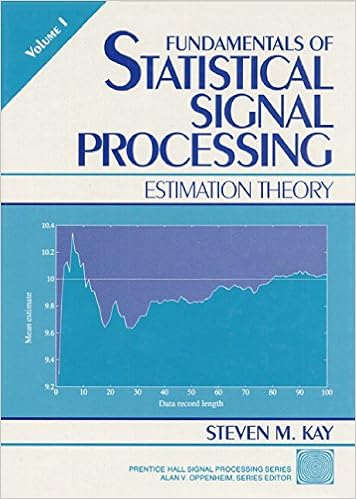
Get Free Ebook Fundamentals of Statistical Signal Processing, Volume I: Estimation Theory (v. 1)

Get Free Ebook Fundamentals of Statistical Signal Processing, Volume I: Estimation Theory (v. 1)

Follow up just what we will offer in this write-up regarding Fundamentals Of Statistical Signal Processing, Volume I: Estimation Theory (v. 1) You recognize truly that this publication is coming as the very best vendor book today. So, when you are actually a great viewers or you're fans of the writer, it does will be amusing if you don't have this publication. It means that you need to get this publication. For you that are starting to discover something new and also really feel interested concerning this book, it's very easy then. Simply get this publication and feel just how this publication will certainly offer you extra amazing lessons.

Fundamentals of Statistical Signal Processing, Volume I: Estimation Theory (v. 1)

Fundamentals of Statistical Signal Processing, Volume I: Estimation Theory (v. 1)


Fundamentals of Statistical Signal Processing, Volume I: Estimation Theory (v. 1)


Get Free Ebook Fundamentals of Statistical Signal Processing, Volume I: Estimation Theory (v. 1)

Challenging the mind to assume far better as well as much faster can be undergone by some ways. Experiencing, listening to the other experience, adventuring, examining, training, and extra practical activities may help you to improve. However right here, if you don't have enough time to obtain the thing directly, you could take a really simple means. Reading is the most convenient task that can be done anywhere you desire.

Any publications that you review, no matter how you got the sentences that have been read from guides, definitely they will give you goodness. But, we will show you among suggestion of the book that you have to review. This Fundamentals Of Statistical Signal Processing, Volume I: Estimation Theory (v. 1) is just what we surely imply. We will reveal you the practical reasons why you need to read this book. This book is a sort of valuable publication composed by a skilled writer.

However, just how is the way to obtain this publication Fundamentals Of Statistical Signal Processing, Volume I: Estimation Theory (v. 1) Still perplexed? It does not matter. You could delight in reading this publication Fundamentals Of Statistical Signal Processing, Volume I: Estimation Theory (v. 1) by on the internet or soft file. Merely download and install guide Fundamentals Of Statistical Signal Processing, Volume I: Estimation Theory (v. 1) in the link offered to go to. You will get this Fundamentals Of Statistical Signal Processing, Volume I: Estimation Theory (v. 1) by online. After downloading and install, you can save the soft file in your computer system or gizmo. So, it will certainly ease you to read this publication Fundamentals Of Statistical Signal Processing, Volume I: Estimation Theory (v. 1) in specific time or location. It might be uncertain to delight in reading this publication Fundamentals Of Statistical Signal Processing, Volume I: Estimation Theory (v. 1), because you have bunches of work. Yet, with this soft data, you could delight in checking out in the leisure also in the spaces of your works in workplace.

Be part of those who enjoy to read this publication. If you are the newbie reader, you can use this book as enticement for you to minimally love analysis. Even this publication is composed by a professional writer, it does not mean that words are extremely hard to comprehend. You could take some lessons and also experiences from Fundamentals Of Statistical Signal Processing, Volume I: Estimation Theory (v. 1) based upon just what you require. This is exactly what calls as benefits of publication by reading. Now, get this publication right here and now. It will certainly be served in the site connect to go to.

Fundamentals of Statistical Signal Processing, Volume I: Estimation Theory (v. 1)

Amazon.com Review

This text is geared towards a one-semester graduate-level course in statistical signal processing and estimation theory. The author balances technical detail with practical and implementation issues, delivering an exposition that is both theoretically rigorous and application-oriented. The book covers topics such as minimum variance unbiased estimators, the Cramer-Rao bound, best linear unbiased estimators, maximum likelihood estimation, recursive least squares, Bayesian estimation techniques, and the Wiener and Kalman filters. The author provides numerous examples, which illustrate both theory and applications for problems such as high-resolution spectral analysis, system identification, digital filter design, adaptive beamforming and noise cancellation, and tracking and localization. The primary audience will be those involved in the design and implementation of optimal estimation algorithms on digital computers. The text assumes that you have a background in probability and random processes and linear and matrix algebra and exposure to basic signal processing. Students as well as researchers and practicing engineers will find the text an invaluable introduction and resource for scalar and vector parameter estimation theory and a convenient reference for the design of successive parameter estimation algorithms.

Read more

From the Back Cover

For those involved in the design and implementation of signal processing algorithms, this book strikes a balance between highly theoretical expositions and the more practical treatments, covering only those approaches necessary for obtaining an optimal estimator and analyzing its performance. Author Steven M. Kay discusses classical estimation followed by Bayesian estimation, and illustrates the theory with numerous pedagogical and real-world examples. Special features include over 230 problems designed to reinforce basic concepts and to derive additional results; summary chapter containing an overview of all principal methods and the rationale for choosing a particular one; unified treatment of Wiener and Kalman filtering; estimation approaches for complex data and parameters; and over 100 examples, including real-world applications to high resolution spectral analysis, system identification, digital filter design, adaptive noise cancelation, adaptive beamforming, tracking and localization, and more. Students as well as practicing engineers will find Fundamentals of Statistical Signal Processing an invaluable introduction to parameter estimation theory and a convenient reference for the design of successful parameter estimation algorithms.

Read more

Product details

Hardcover: 608 pages

Publisher: Prentice Hall; 1 edition (April 5, 1993)

Language: English

ISBN-10: 0133457117

ISBN-13: 978-0133457117

Product Dimensions:

7.4 x 1.4 x 9.2 inches

Shipping Weight: 2.3 pounds (View shipping rates and policies)

Average Customer Review:

4.3 out of 5 stars

20 customer reviews

Amazon Best Sellers Rank:

#60,930 in Books (See Top 100 in Books)

Wonderful book. Explanations are clear and examples are plenty and very insightful. The author's prose is somewhat spartan but very accessible and to the point. It is a book for studying and reading with a pen and pencil while working through the exercises as you stride along. One can definitely learn a lot about estimation from it: Cramer-Rao lower bound, minimum variance estimators, linear data model, least squares estimation, maximum likelihood, method of moments, MAP estimation, bayesian estimation and all. Later chapters DO build on top of previous ones, so it is NOT a book to read here and there or to use as a reference, unless you have already worked through it before. End of chapter problems do not come with solutions, but are very cleverly thought out to add more to what has been learned in the chapter. Plenty of examples throughout the book. Lots of back-references to examples in previous chapters and back-references to previous sections. Very much like a textbook, either for class or self study. In other words, the author has what it takes to write a good (text)book. Good no, wonderful. Thumbs up and five stars.

This is an excellent book for someone who needs to pick up the essentials of estimation theory in a hurry. I have never taken a course on statistical signal processing or information theory, and yet I was able to learn the subject just from reading this textbook to the point where I can do graduate level research in the area. Kay makes the text very readable so one can just follow along as if attending lectures, and he does a brilliant job of striking the right balance of theory and real-world examples so you can really understand the material. I did not have enough time to try many of the exercise problems, but the ones that I did try were excellent. I was however able to gain enough understanding through the text and examples to actually put it into practice in my own research, so that is definitely the sign of a great textbook.

I bought this book because I wanted an practical adjunct to accompany my study of linear modeling theory using Stapleton's "Linear Statistical Models." Stapleton's text is theoretical where results are explained. I had hoped Kay's book would provide some practical examples from engineering and technology. The problem was that Kay's book just states results. There is no development of the results from beginning theory with examples. Why should one make the assumptions he makes?But this is just my take. From perusing the other reviews of Kay's book, he produces what some other reader's want.

This book deserves this rate because it is simply the most didactical book about Estimation Theory that I have read.I liked everything, each chapter. The book is perfect for a graduate one-semester course on Estimation Theory and for every one who needs Estimation Theory.

this book is in my opinion one of the best books about this topic. It has a very neat and clear language.

Very concise and fluent and easy to follow. Love it!!!!I'm studying it on my own and I could easily follow this book.

This book is a masterpiece ! Easy to read and to follow. I've bought many book in Signal Processing (Estimation Theory, Spectral Analysis, Time Frequency, Pattern recognition)and, for me, this one is the best !

Excellent!

Fundamentals of Statistical Signal Processing, Volume I: Estimation Theory (v. 1) PDF
Fundamentals of Statistical Signal Processing, Volume I: Estimation Theory (v. 1) EPub
Fundamentals of Statistical Signal Processing, Volume I: Estimation Theory (v. 1) Doc
Fundamentals of Statistical Signal Processing, Volume I: Estimation Theory (v. 1) iBooks
Fundamentals of Statistical Signal Processing, Volume I: Estimation Theory (v. 1) rtf
Fundamentals of Statistical Signal Processing, Volume I: Estimation Theory (v. 1) Mobipocket
Fundamentals of Statistical Signal Processing, Volume I: Estimation Theory (v. 1) Kindle

Fundamentals of Statistical Signal Processing, Volume I: Estimation Theory (v. 1) PDF

Fundamentals of Statistical Signal Processing, Volume I: Estimation Theory (v. 1) PDF

Fundamentals of Statistical Signal Processing, Volume I: Estimation Theory (v. 1) PDF

Monday, April 14, 2014

Download Ebook Sisterhood Is Forever: The Women's Anthology for a New Millennium, by Robin Morgan

Download Ebook Sisterhood Is Forever: The Women's Anthology for a New Millennium, by Robin Morgan

Sisterhood Is Forever: The Women's Anthology For A New Millennium, By Robin Morgan as one of the referred publications that we will certainly offer in this site has been checked out to be one legitimate source. Even this subject prevails, the means just how author makes it is extremely eye-catching. It could draw in the people that have not understandings of reading to start analysis. It will make somebody keen on this publication to check out. And it will certainly instruct someone to earn far better choice.

Sisterhood Is Forever: The Women's Anthology for a New Millennium, by Robin Morgan

Sisterhood Is Forever: The Women's Anthology for a New Millennium, by Robin Morgan


Sisterhood Is Forever: The Women's Anthology for a New Millennium, by Robin Morgan


Download Ebook Sisterhood Is Forever: The Women's Anthology for a New Millennium, by Robin Morgan

Sisterhood Is Forever: The Women's Anthology For A New Millennium, By Robin Morgan. Provide us 5 minutes and also we will show you the most effective book to read today. This is it, the Sisterhood Is Forever: The Women's Anthology For A New Millennium, By Robin Morgan that will certainly be your ideal option for much better reading book. Your 5 times will not spend thrown away by reading this internet site. You could take guide as a source making far better principle. Referring the books Sisterhood Is Forever: The Women's Anthology For A New Millennium, By Robin Morgan that can be positioned with your demands is sometime difficult. But here, this is so very easy. You can locate the best thing of book Sisterhood Is Forever: The Women's Anthology For A New Millennium, By Robin Morgan that you could review.

As known, journey and encounter about lesson, amusement, and understanding can be gained by only reading a publication Sisterhood Is Forever: The Women's Anthology For A New Millennium, By Robin Morgan Also it is not straight done, you could know more about this life, regarding the world. We offer you this correct and also very easy way to get those all. We provide Sisterhood Is Forever: The Women's Anthology For A New Millennium, By Robin Morgan and also many book collections from fictions to scientific research at all. One of them is this Sisterhood Is Forever: The Women's Anthology For A New Millennium, By Robin Morgan that can be your companion.

Schedule tends to be the home window to world, as exactly what lots of people say. Yet, publication will certainly not be this wonderful point to the new globe if you do not review it and also comprehend. Reading a book is not a force. It's actually a requirement to be one of advice in life. Sisterhood Is Forever: The Women's Anthology For A New Millennium, By Robin Morgan is even not sort of a large wonderful publication type; every world can be used to suggest you to life much better. Even you have great thing about strategies, you may need to read this kind of publication. Why?

When you are thinking that this publication is also proper for you, you should set the time when you want to begin analysis. In making the concept of the analysis publication, this publication can be starter indicate lead you loving a book, not only to display however additionally to read. Now, aim to comprehend it and also allow your family and friends know about this publication and site. You can inform to them that this site truly provides billion titles of publications to read. So, accumulate as well as get the features.

Sisterhood Is Forever: The Women's Anthology for a New Millennium, by Robin Morgan

From Publishers Weekly

This book, the third in an anthology series on women's history and feminism (after 1970's Sisterhood Is Powerful and 1984's Sisterhood Is Global), is as multifaceted and compelling as the issues it explores. Theorist, activist and writer Morgan begins and ends the hefty tome with her own vibrant writing: a stirring introduction and concluding letters to "vintage feminists" and "younger women" alike about their role in protecting and expanding their rights. The bulk of the book is a collection of some 60 essays-some factual and scholarly, others narrative and poignant-addressing women's issues from a wide scope of angles. There's a piece by Gloria Steinem about how antifeminism plays itself out in the media, a rousing cry to end sexual harassment by Anita Hill and a meditation on women's role in farming and agriculture by Carolyn Sachs. Beverly Guy-Sheftall writes on the legacy of black feminism; Natalie Angier stresses that feminism and its impulses are "part of human nature"; and Eve Ensler sings the praises of theater as "a sacred home for women." Morgan wisely offers commentary from liberal and conservative feminists alike, and her book is a smart, telling testament to how far women have come and where they will go. Copyright 2003 Reed Business Information, Inc.

Read more

Excerpt. © Reprinted by permission. All rights reserved.

Biologically CorrectNatalie AngierIn all my years as a science writer, I've sought to encourage friends, relatives, and other members of the laity not to be so afraid of science. Science doesn't belong only to scientists, I've exhorted, any more than art belongs only to artists, or politics to the Eeyores and Dumbos of Washington, D.C. Science is the property of the human race. It's one of our greatest achievements, and it doesn't take nearly as much effort as nonscientists believe to become reasonably literate in a particular discipline, to the point where you may even venture an opinion on, say, the rights of a U.S. consumer to drive an SUV, global warming be damned, versus the rights of a citizen of Bangladesh to continue living above sea level.But I'm afraid that when it comes to my most cherished of subjects, evolutionary biology, the concept of scientific populism has been taken too far. It seems practically everybody is now an amateur Darwinist, willing to speculate grandly on the deep Plio-Pleistocene origins of all modern vices known to man, woman, or Tony Soprano. Lawyers bring evolutionary reasoning into the courtroom. Psychologists discuss the evolutionary basis of depression, neuroticism, anorexia, alcoholism, a wicked sweet tooth. Theologians insist the human brain evolved to believe in god, who may or may not return the favor by believing in evolution.Now, I don't believe evolution is a "theory," any more than I believe gravity and the second law of thermodynamics are theories. I consider myself a Darwinist right down to my DNA, which I'm happy to share 98.5 percent of with our cousins, the chimpanzees. But it's one thing to revel in Darwin's magnificent, overarching theory of evolution by natural selection, and another to play Spin-the-HMS Beagle of a Saturday night and call the results "science." Yet to my disgust and occasionally crippling sense of despair, many of the slap-happy, data-free Darwinesque theory-ettes to emerge in recent years have been widely dispensed and accepted, to the point where they, too, are considered the biological equivalents of E=MC2. And nowhere has the acceptance of evolution-tinged notions been greater, more credulous, and more insidious than for those purporting to explain the supposed differences between the sexes. Darwinophiles, particularly the subspecies who label themselves "evolutionary psychologists," love to talk about the gulf that separates men and women. Everywhere I turn, there they are: thematic variations of the dreary old ditty, "Higgamus hoggamus/women are monogamous; hoggamus, higgamus/men are polygamous." Or, in another mildewed rendering: men are ardent, women coy. Or how about: men want quantity, women quality. Or take that: men want sex, women want love. Evolutionary psychology has newly proved old verities to be true. Not necessarily with data, mind you -- how much data do you need to prove the obvious? -- but with nifty new theoretical constructs and sufficiently high jargon-wattage terminology to lend a spangle of rigor to the field.For example, evolutionary psychologists (evo psychos) love to talk about "mental modules," little cerebral fiefdoms that supposedly operate independently and subliminally to prevent us from behaving in the rational, integrated, thoughtful manner that we deluded femi-Nazi types might strive to accomplish. As a result of these finely honed modules, which evo psychos liken to the separate tools in a Swiss army knife, we will do things that may seem illogical and even counterproductive to our lives overall -- say, by choosing a dumb mate just because he's tall or she has big breasts and our "mate-finding" module sees the person as a bearer of good genes or a fecund womb, thus the best tool for the job of reproducing. So what if our intellectual or kinship-bonding modules disapprove of what our mate-finding module brought home? And so what if there is as yet no evidence for the existence of these mental modules? Evo psychos also emphasize the "differential reproductive potential" between men and women, transmutating the numeric discrepancy between a man's sperm cells and a woman's egg cells into any and all sex-linked inequities you care to mention: the rarity of female CEOs or Nobel laureates; the spareness of the average female's salary; the disparity in gumption, motion, get-up-and-go-tion.No longer are the "evolved" differences between men and women presumed hypothetical until proven actual, as they might have been as recently as the early 1990s; now they are pretty much post-factual. For example, in his essay "The End of Courtship," bioethicist Leon Kass (chosen by President George W. Bush to head a national bioethics advisory panel), quotes the tired hoggamus doggerel, declaring -- without apology, footnote, or citation -- that "Ogden Nash had it right." (Memo to Kass: the verse was written by William James.) This keeper of the nation's moral compass asserts that a "natural obstacle" to courtship and marriage is "the deeply ingrained, natural waywardness and unruliness of the human male." One can make a "good case," Kass continues, "that biblical religion is, not least, an attempt to domesticate male sexuality and male erotic longings," although how good a case depends on whether you consider an Old Testament hero like King Solomon, who had 700 wives and 300 concubines, to be an exemplar of domesticated masculinity. As for modern women, Kass pities us as we hop unnaturally from bed to uncommitted bed, "living their most fertile years neither in the homes of their fathers nor their husbands." Far from enjoying "sexual liberation," he says, we are awash in quiet desperation, "unprotected, lonely, and out of sync with their inborn nature."Apart from the general yuckiness of Kass's aspartame-tainted nostalgia, I wouldn't mind terribly if such self-styled neo-Darwinists restricted their pontificating to insisting that men are, on average, more sexually rapacious and prone to philandering than women. I don't believe that claim, and in fact some evidence indicates otherwise: while performing routine prenatal screening tests for the presence of disease genes, genetic counselors have found incidentally that anywhere from 5 to 15 percent of babies are fathered by somebody other than the mother's husband -- and surely not all these women were forced against their "inborn nature" into adulterous copulations.Nevertheless, I can keep my erotic longings to myself, and if it makes a fellow feel better to insist that his are bigger and more unruly than mine, he can insist away. What is far more disturbing, and what I cannot accept without mounting my soapbox for a lusty rant, is the tendency of the evo-psycho crowd to attribute to men not only greater sexual ardor, but greater ardor for life. Kass writes that men are not only innate sexual "predators," but are also "naturally more restless and ambitious than women; lacking women's powerful and immediate link to life's generative answer to mortality, men flee from the fear of death into heroic deed, great quests, or sheer distraction after distraction."Others are even more presumptuous. On a computer list populated by academic sex researchers, one member recently asked for commentary about the following quote from an unnamed source:As a consequence of differential evolutionary histories, human genetic males, on average, differ from genetic females in fundamental behavioral ways. Males are more competitive, aggressive, creative, and inquisitive than females. These behavioral characteristics are evident throughout human societies to one degree or the other, and in aggregate are irrefutable. These average differences are clearly reflected in the dominance and achievements of males over the course of human history in politics, architecture, science, technology, philosophy, and literature, among other areas of human activity and intellectual concentration. It is reasonable to posit that these average differences between human males and females are functions of the differential environmental demands human males encountered over tens of thousands of years in human evolution. Today these differences are founded in the genetic and hormonal constitution of the human male.My reaction on reading this was, Huh? Are you joking? Men by their "genetic and hormonal constitution," are more "creative" and "inquisitive" than women? Sez who? Sez what data? To my dismay, other members of the list were unperturbed. "It is pretty standard evolutionary psychology of sex differences," shrugged one professor, referring to various popular books about evolutionary psychology, including the bluntly titled, Why Men Rule: A Theory of Male Dominance. Woe to this professor's female students if he conveys to them his settled opinion that males have a hardwired advantage in exactly those traits necessary to excel in his class. Well, every trait except cleavage.I don't mean to be flip and sarcastic. OK, I do. But I also want to express my frustration at how readily and arrogantly so much evolutionary blather can be bandied about, with hardly a whimper of complaint or an attempt at alternative interpretation. Remember, I'm a big fan of Darwinism, convinced that by considering the deep roots of our past we can enrich our lives now, if only because understanding always trumps ignorance and denial. I also believe that evolutionary biology is a growth industry, and that we will be seeing ever more effort, inside and outside of academia, to examine contemporary human behavior from a Darwinian perspective. Fine. But maybe we shouldn't leave the analysis to a small, self-referential cabal of evolutionary psychologists, who attempt to reify the status quo with a few sweeping, simplistic, binary formulations.Maybe we should seek to use Darwinian principles to our own nefarious ends -- beginning with a fresh understanding of feminist impulses. Many mainstream neo-Darwinists try to dismiss feminism: "We're scientists! We seek the truth about human nature, however unpleasant," they self-righteously maintain. "We must resist the forces of 'political correctness' and get at the truth."But what this smug dismissal fails to address is the fact that feminism and its attendant egalitarian impulses are very much part of human nature. Hence, any system that purports to explain the primal origins of our desires must also explain why any of us want to be feminists in the first place. I would argue that feminism is an evolved trait -- part of the puzzle to be solved, not a distraction from it. If it takes evolutionary biologists who double as feminists to tackle this particular puzzle piece, they can fairly be said to be at their most "scientific" just when evo-psycho critics are pooh-poohing them for being driven by "political" motives.Some scientists do see the need to move beyond clichés toward a more nuanced picture of human motivation, a recognition of the suppleness of human nature, the capacity for men and women to adjust their social and reproductive strategies as conditions around them change. Male as well as female scientists lately have argued for broadening the field of evolutionary psychology to incorporate the notion that our psychology does in fact evolve, is designed to evolve, even in the absence of genetic evolution. There is a reason why we have managed, for better or worse, to colonize virtually every habitat on the earth's surface, and to turn the planet and its glorious diversity into a vast playground for Homo sapiens. It's because we are omnivores in every sense of the word -- nutritionally, culturally, behaviorally. Any theoretical framework that slights our plasticity, that declares all or most men to be like this, and all or most women to be like that, is a framework fit only for kindling.Here's an example of rigid absolutism, again from Sexnet, which made me run for my matchbook. A hard-core evolutionary psychologist presented his little gedanken, then kindly told us just how to gedank about it: "There is a contest," he wrote. "If you win you get either of two prizes: unlimited store credit at Saks Fifth Avenue for a 10-day period -- that is, you can have anything you can walk away with -- or have 10 extremely attractive total strangers of the preferred sex, a different one each night, come to your room, rip your clothes off, and have mad sex with you. I guarantee you that close to 100 percent of young men will choose the latter, and close to 100 percent (or literally 100 percent) of women, young or older, will choose the former."The old Sex vs. Saks dilemma. When I read this, I thought, "Neither of the above, sir." I won't go into what my fantasy prize might be -- or might have been in the days when I was a single woman without kids -- but these boxes don't hold me and never did. Nor do they hold a lot of people, including a lot of good evolutionary scientists. I expressed my annoyance to David Sloan Wilson of the State University of New York at Binghamton, a scientist I mostly adore (with the exception of his occasional fits of didacticism that seem endemic to the scientific trade). Wilson has criticized much of the current evo-psycho literature while still considering himself an evolutionary psychologist, so I knew he'd sympathize with my desire for a more inclusive, expansive approach to understanding the evolution of human nature. I sent him the gedanken, and described my surly feelings about it. Darwin bless him for his delicious reply: "Your 'Neither of the above' answer can be given a serious scientific formulation. The evolutionary psychology view assumes that all resources for women flow through men, leaving only the 'strategies' of 'find the best husband' or 'maximize your returns from sexual favors.' The option that is not listed is 'self-determination,' or calling one's own shots. With this simple addition, feminism finds an evolutionary voice capable of silencing the evolutionary psychology voice on its own turf." Wilson then paused for a pious commercial break, warning me that whenever I sought to argue against "the narrow evolutionary psychology view, or any other objectionable evolutionary theory of human behavior," I must do so from an evolutionary perspective of my own, lest I "leave the opposition holding the banner of Darwinism," crowing about the stupidity of their critics for rejecting evolution altogether. "As an aside," Wilson went on, "even in its shriveled form the Sex vs. Saks experiment wouldn't work. Any guy with a brain (an oxymoron in most cases) would choose the Saks option and amass so much stuff over 10 days that he could have more than 10 women long enough to actually impregnate them. If he could choose Abercrombie & Fitch instead of Saks, he'd probably throw it all away for a single fishing pole. The boneheads who chose the women would probably have second thoughts by night 5 and would beg numbers 8, 9, and 10 to watch TV instead of having sex." In the words of George Bernard Shaw, Wilson concluded, "'They are barbarians who mistake their own customs for human nature.'"What can we do to reclaim the blessed turf of Darwinism? How can we think afresh about our contemporary selves in the light of several million years of thrashing around in the grim and shank of nature? Let me toss out a few ideas I feel have been neglected in most pop renditions of neo-evo. Let me try, to the best of my ability as a serious if not officially credentialed Darwin hobbyist, to present an ancestral Eve who had greater or at least more complex aims in life than a Stone Age shopping spree.I'll start with the answer I give whenever anybody asks me what I think the real, primal, non-negotiable differences between men and women may be. I preface my response by claiming the ignorance we all suffer under in any discussion of the roots of something as intangible and free of fossil evidence as human nature. But there is one big difference -- which amounts to an amusing similarity, with profound consequences. A woman, like any female primate, has two core desires. First, access to resources, which means food, shelter, and -- ever since we were so rudely and coldly depilated -- clothing, for herself and her young. Second, control over her sex life and her reproduction. What are a man's core desires? He, too, wants access to resources and control over the means of reproduction, which, in the absence of male parthenogenesis, means control over women. There's nothing inherently wrong with this desire. But the fact that women and men are tussling over the same piece of valuable real estate -- the female body -- means that the tedious, endlessly vivisected "war between the sexes" is pretty much built into the system. I'm by no means arguing that men and women can never get along. The best of friends and allies are often cunning competitors. Consider the Greek warriors in the Iliad who, during intermissions in the Trojan War, could think of no zestier way to spend their leisure than holding mini-Olympics to see who could run the fastest, throw the farthest, jump the highest -- all in the nude, no less. Recall as well that even the most seemingly like-minded, bodily bonded of dyads, mother and infant, engage in subtle conflicts. The fetus wants to grow very big very fast, while the mother wants to keep its dimensions compact and manageable to preserve her body for future trials, which is why some fetus-specific genes are designed to enhance the growth of the placenta, and the maternal equivalents of those genes help suppress placental ambitions. The child wants to stay on the breast year after year, the better to forestall births of rival siblings through the ovulatory suppression that nursing imparts; the mother wants to wean her greedy suckler and maybe have a few more kids without depleting her calcium stores and risking every osteocyte in her body.Yet such subconscious clashes of interest do not mean that mother and young are "really" enemies rather than the great lovers they often appear to be. Instead, they are living creatures, bound together by fourteen-carat compromise, trading up Paradise Lost for Paradox Found, and relishing the match. So, too, can men and women love each other wildly without necessarily, or even desirably, seeing eye to eye -- provided everyone's eyes are wide and gimlet.What the inherent dialectic of the sexes does mean is that men and women may have differing definitions of freedom. Evo psychos, opining from their standard masculinist perspective, emphasize the clash between a man's "restlessness" and a woman's desire for "commitment," as exemplified by the Leon Kass passage quoted above -- the assumption being that men need freedom and women do not. But if you take a more female-primate point of view, you see that quite often it is the woman who wants her freedom, and the man, or men collectively, who are determined to circumscribe her. A woman may want freedom to walk by herself down the street, just as a female chimpanzee may have the urge to move from denuded bush A to bursting berry patch B; but if the wayfarer happens to be a young urban Homo sapien, she will be harassed en route more mercilessly than any free-ranging ape. A woman may also want the opportunity to exercise that old gift of Mother Nature known as female choice -- to socialize, flirt, and, if the chemistry fits, to mate with the men she likes while avoiding those she does not.But think of how many women are abused and beaten, sometimes hunted down and killed, by men who have either fallen off the women's A list, often because they were too aggressively possessive, or never made it to the chosen column in the first place.3 Many men play within the bounds of female choice and seek to please the women they find pleasing, just as women usually strive to please the men by whom they themselves hope to be chosen. But sometimes a man has little patience for the strictures of female choice; he wants access to the means of personal perpetuity that only a female body can give him, so whack smack get over here bitch! Who, in these cases, is seeking to "domesticate" whom, and who most fearful of being barred from connubial bliss?Evo psychos are well aware of the potential ferocity of male sexual jealousy; they incorporate the power of that jealousy into many of their theories about differing male and female strategies. But they fail to admit that male jealousy exists because women are, whether they take the tag or spurn it, born feminists. Women, like men, want the freedom to roam, explore, experiment -- all desires to be expected in a highly intelligent, inquisitive, shrewd, opportunistic, social species. It's not "out of sync" with our "nature" to want autonomy. The individual is the reproductive unit. Through the fantastic efforts of eons of evolution, the individual is born to like its particular genome, to want to get as much of that genome into the population as possible. The individual does not like being pushed around, deprived of choice, enslaved. The individual tends to chafe against excessive oppression. This is not "political correctness." This is common sense, Darwinian sense; our past, present, and future sense.Then there is the bracing sense of dollars and cents. Not only do women yearn for the plain old primate liberty to come and go, pick and choose. Protestations of Kass and company notwithstanding, women are also born ambitious: they want social power, respect, admiration. Such desires are not the invention of the modern feminist movement. They are our birthright, or burden, as a profoundly social species, in which personal power translates into all the goodies of life. Nor is the lust for acclaim and high rank in contradistinction to a woman's more familiar "nurturing" side. The two impulses -- to succeed in society, and to care for your children -- are expressions of the same drive. A good mother is a powerful mother. A good mother can accrue resources for her young, and a really good mother can outcompete other mothers in the neighborhood, thereby ensuring that her children will do really well, while the children of less ambitious stock skulk around the back forest smoking acanthus leaves before getting picked off by a leopard.The inherent ambitiousness of women can be seen in any country where women are not confined to home or burqa. At the slightest opportunity, women flock to schools, so much so that university officials in the United States bemoan the comparative lack of male faces in the classroom. Women take to the professions with astonishing ease: ever since the contemporary feminist movement helped open heretofore forbidden trades to women, the number of female doctors and lawyers has jumped from a few percent to nearly 50 percent, and woman-owned businesses are the fastest growing sector of our society.4 Despite media gloatographies about the women who yearn to stay at home and be supported by a man, surveys repeatedly show that most employed women like earning a paycheck.Yet despite the evidence, evo-bloviators have ignored or denied the existence of women's ambition. Behind this neglect are a couple of conceptual chestnuts in serious need of roasting.First is the idea that males and females have wildly different reproductive prospects. By this notion, males tend to fall on either end of the reproductive scale, as "zeroes" or "heroes," with most failing utterly to reproduce, and a minority of lucky stiffs monopolizing most of the females and siring most of the young. In contrast, females have been viewed as interchangeable, bearing more or less the same number of offspring and being more or less similarly talented in mothering skills. Hence, males had a strong spur to be hyperambitious and competitive, while females supposedly did best by keeping a low profile, busying themselves with a predictable number of bairns.Recent research, including extensive paternity studies using DNA fingerprinting techniques, has skewered this folklore. As it turns out, the alpha males in many species breed fewer young than presumed, and the supposed duds sometimes prove spermic studs. Among females, on the other hand, the discrepancy in fruitfulness is far greater than previously believed. Some females are much better at bearing and rearing young than others, and those supermoms, as it happens, are the powerhouses of their societies. For example, Flo, a member of the Gombe chimpanzee troop long studied by Jane Goodall, was the most prolific female chimp of all time. She reared all but one of her nine infants to adulthood, a success rate at least twice that for the average chimpanzee mother. Flo also happened to be the most powerful female chimpanzee any researcher has ever observed. She could displace virtually any other chimpanzee -- save the highest ranking, much larger males -- from a prize feeding site, and her subordinates competed for the chance to groom her. So powerful was Flo that her daughters managed to stay in their birthplace rather than being forced to migrate at puberty as female chimps usually are; those daughters in turn became powerful, prolific matriarchs."Mother chimps like Flo were not simply doting nurturers but entrepreneurial dynasts as well," writes the primatologist Sarah Blaffer Hrdy in her marvelous book, Mother Nature: Maternal Instincts and How They Shape the Human Species (Pantheon, 1999). "A female's quest for status -- her ambition, if you will -- has become inseparable from her ability to keep her offspring and grand-offspring alive." As Hrdy sees it, a generalized striving for local clout was programmed into the primate female's psyche long ago, the result of a convergence between high status and successful motherhood.Another reason why the evo psychos have shortchanged female striving stems from their assumption that whatever status and power women have sought they sought secondhand, by coupling with strong, ambitious, powerful men. This supposition is part of the larger tenet that women have a much greater need for men than any other female primate has for her male counterpart. The prolonged helplessness of the human infant (the story goes) means that a woman can't rear it alone; hence the evolution of love, romance, and committed fathers. It's true that women need help to rear their young, much more help than any other female ape requires. But the most recent anthropological evidence strongly suggests that women get such help from many quarters: from men, from relatives, from their older children. In some traditional cultures, senior females are indispensable to the welfare of their young kin; in others, women rely more on the assistance of brothers, uncles, and male cousins than on the take-home prey of their mates; elsewhere, women accept contributions from a number of different consorts. As anthropologist Meredith F. Small notes in Kids: How Biology and Culture Shape the Way We Raise Our Children (Doubleday, 2001), about 90 percent of childcare in the world is performed by older siblings.In sum, women through the ages and across the world's stages have been remarkably creative and adaptable when seeking solutions to the childcare crisis. We have always lived in a nanny state of one sort or another. For their part, men do not always display the hallmarks of devoted fatherhood. As Geoffrey F. Miller has described in The Mating Mind: How Sexual Choice Shaped the Evolution of Human Nature (Doubleday, 2000), much of the behavior we view as paternal may be a courtship display, a way of pleasing one's current mate and perhaps attracting the attention of other females in the vicinity. If good fathering conduct were driven by the same thing as is maternal behavior -- a desire to improve one's offspring's chances of survival -- why, Miller asks, would so many fathers end up as deadbeat dads who invest virtually nothing in the children of women they have divorced or abandoned? After all, DNA paternity testing is a ridiculously recent invention, and the grim male fears synopsized by the couplet, "Mother's baby/Father's maybe" are not to be dismissed out of hand.If paternity uncertainty bred waffling fathers prone to bolting from their responsibilities, we would expect as a corollary women who likewise waffled about pinning their future and their children's welfare to one man, however alpha. How foolish a woman would be to forsake any attempt at gaining a degree of personal power or cultivating a reliable route to resources, simply for the opportunity to marry an ambitious man who could easily abandon her, be killed while out hunting, or simply prove to be a fraud. It's tempting to think that women have indeed "evolved" to hook their prospects to their mates, because we see as much in the annals of history -- not to mention the pages of Jane Austen -- but in fact the condition of extreme female dependency on husbands is very recent, and depends for its maintenance on a strong set of laws making divorce difficult and punishing deadbeatism. As we've seen in recent decades of loosened divorce laws, women who cling to the model of complete economic reliance on a husband suffer terrible financial hardship when the marriage breaks up, and they and their children are all too likely to be cast into poverty. That such a risky "my man is my meal ticket" strategy could have arisen and persisted in prehistory, in the absence of a legal system and in the face of chronic threats of famine, seems to me frankly laughable. Better to be ambitious, cunning, and, yes, creative, competitive, and aggressive. Better to earn your degree, learn a trade, get a paycheck, kiss it, and sock it away. If you're going to bank on anything, it might as well be a bank.Natalie Angier is a best-selling author and Pulitzer Prizewinning science writer for The New York Times. Previously, she has been senior science writer for Time magazine, an editor at the women's business magazine, Savvy, and a professor at New York University's Graduate Program in Science and Environmental Reporting. Her first book, Natural Obsessions (Houghton Mifflin), an inside look at the world of cancer research, was named a notable book of the year by The New York Times and the American Association for the Advancement of Science (AAAS). In 1990, she began working for The New York Times; the following year, she won a Pulitzer in the category of beat reporting, for a series of articles on a wide array of scientific topics, from the biology of scorpions, to the astonishing prevalence of infidelity in the animal kingdom. Among her other awards are the AAAS-Westinghouse award for excellence in science journalism, and the Lewis Thomas Award for distinguished writing in the life sciences. Her second book, The Beauty of the Beastly (Houghton Mifflin), has been translated into eight languages. Her latest, Woman: An Intimate Geography (Houghton Mifflin, 1999; Anchor Vintage paperback, 2000), was a bestseller, a National Book Award finalist, winner of a Maggie Award from the Planned Parenthood Federation, and named one of the best books of the year by the Los Angeles Times, the Chicago Tribune, and other major media. She is the editor of The Best American Science and Nature Writing 2002 (Houghton Mifflin). Her writing has appeared in numerous periodicals ranging from the Atlantic Monthly to Natural History, from Cosmopolitan to Ms.Suggested Further ReadingEhrlich, Paul R. Human Natures: Genes, Cultures, and Human Prospects. Washington, D.C.: Island Press, 2000.Hrdy, Sarah Blaffer. The Woman That Never Evolved. Boston: Harvard University Press, 1981; reissued with a new Preface in 1999.Jolly, Alison. Lucy's Legacy: Sex and Intelligence in Human Evolution. Cambridge, Massachusetts: Harvard University Press, 1999.Rose, Hilary, and Steven Rose, eds. Alas, Poor Darwin: Arguments Against Evolutionary Psychology. New York: Random House, 2000.Small, Meredith F. What's Love Got to Do with It? The Evolution of Human Mating. New York: Anchor Books, 1995.Copyright © 2003 by Robin Morgan

Read more

Product details

Paperback: 640 pages

Publisher: Washington Square Press (March 5, 2003)

Language: English

ISBN-10: 0743466276

ISBN-13: 978-0743466271

Product Dimensions:

6.1 x 1.7 x 9.2 inches

Shipping Weight: 1.6 pounds (View shipping rates and policies)

Average Customer Review:

5.0 out of 5 stars

5 customer reviews

Amazon Best Sellers Rank:

#673,767 in Books (See Top 100 in Books)

I didn't know I have such a huge family with so many extraordinary sisters. Of course all women are exceptional. Robin opened up my world to learn about how much women have accomplished. My former life was starved for knowledge about the suffering and the courage of women everywhere.After reading this book my heart goes out to women of all ethnicities and races. My upper middle class views have been enriched exceedenly. I hope to read more books by Robin. I need her knowledge sooner than later. Thank you Robin.

This book is a ver good start for those interesed in feminism. Morgan collects 60 essays for well-known feminist authors. The topics ranges from reproductive, health, and environmental issues to workplace inequality. The book is so cheap in comparison to the material. I will buy Morgan other books. I think they are an investment in comparison to price.

This early feminist anthology is a seminal work that changed how women were perceived. It is well worth rereading lest we forget.

I was hesitant about getting this book because in reviews on other websites some people argued that the book was a bit too colloquial as opposed to a composition of scholarly research. But I found that the writing style enhanced the impact of the message that each contributor aimed to convey in her piece. And most of the women who contributed to the book are experts in their own right anyway ( if you care to do your own research). It was an excellent book overall.

This is your Feminist Consciousness: (Imagine a geranium, wilted and bedraggled, in a cracked flowerpot.)This is your Feminist Consciousness after reading SISTERHOOD IS FOREVER: (Imagine the same geranium, but now it is vibrant with new blooms. Its wide, striped leaves obscure the rim of its painted pottery planter. Bees and butterflies alight on its red floral globes.)Well, that's how it was for mine. Morgan's first two Sisterhood anthologies introduced me to Feminism and shaped the way I understand economics, relationships, spirituality -- (pretty much everything!) But I read them years ago when I was in college. Although I proudly identify myself as a Feminist, I haven't felt very politically active in the past decade. SISTERHOOD IS FOREVER reminded me of the many shapes political action can take. It introduced women who are making a positive difference in women's lives -- and in the whole wide world -- in a breathtaking diversity of ways. Writers, musicians, doctors, mothers, representatives in Congress, organizers and others tell how they work, what they do, how much they have accomplished, and what they hope to achieve.SISTERHOOD IS FOREVER really does represent a wide varity of points of view. Young and old women, women of many different ethnic groups, women with disabilities, poverty activists, professional women, and more have space on these pages.Read it and realize that you are part of a proud and powerful global sisterhood of Feminists.

Sisterhood Is Forever: The Women's Anthology for a New Millennium, by Robin Morgan PDF
Sisterhood Is Forever: The Women's Anthology for a New Millennium, by Robin Morgan EPub
Sisterhood Is Forever: The Women's Anthology for a New Millennium, by Robin Morgan Doc
Sisterhood Is Forever: The Women's Anthology for a New Millennium, by Robin Morgan iBooks
Sisterhood Is Forever: The Women's Anthology for a New Millennium, by Robin Morgan rtf
Sisterhood Is Forever: The Women's Anthology for a New Millennium, by Robin Morgan Mobipocket
Sisterhood Is Forever: The Women's Anthology for a New Millennium, by Robin Morgan Kindle

Sisterhood Is Forever: The Women's Anthology for a New Millennium, by Robin Morgan PDF

Sisterhood Is Forever: The Women's Anthology for a New Millennium, by Robin Morgan PDF

Sisterhood Is Forever: The Women's Anthology for a New Millennium, by Robin Morgan PDF